Friday, May 21, 2010

Some Randoms

These are some random photos i have taken.
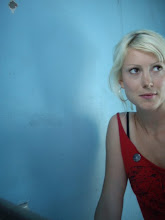
Some i have experimented with the colours, depth of field and light


Thursday, May 20, 2010

Final Folio - Working with depth of field


My second concept for my final folio utilises portraiture photography and focuses around pogonology. Today i took portraits of random people with beards on brunswick street.
I wanted the background to be out of focus, so i had to play around with the depth of field by changing the aperture, focal length and the shooting distance from both the subjects and the background. I had the subject stand 2 metres from the wall, i zoomed in to its maximum point and moved around to find the right position. My aperture was on f4 and focused until the eyes were sharp.

Controlling depth of field
Although print size and viewing distance are important factors which influence how large the circle of confusion (how much a point needs to be blurred in order to be perceived as unsharp) appears to our eyes, aperture and focal distance are the two main factors that determine how big the circle of confusion will be on your camera's sensor. Larger apertures (smaller F-stop number) and closer focal distances produce a shallower depth of field.


Depth of field is governed by three factors: aperture, lens focal length and shooting distance.
The following relationships are:
    1. The smaller the aperture, the deeper the depth of field (the other two factors remaining the same). For example, if the lens focal length and the shooting distance stay the same, the depth of field is much deeper at f/16 than at f/1.4.
    2. The shorter the lens focal length, the deeper the depth of field (the other two factors remaining the same). For example, comparing a 28mm lens with a 50mm lens at the same aperture and shooting distance, depth of field is deeper with the 28mm lens.
    3. The greater the shooting distance, the deeper the depth of field. i.e. other two factors remaining the same). For example, if the subject is photographed from three and then from seven meters away, the zone of sharpness in the foreground and background is greater at seven meters.

Another characteristic of depth of field is that it is generally deeper in the background than in the foreground.


After working with portraiture photography, i have been trying to determine my constants. Whether it be the light, background, distance, angle or subjects, i needed a constant to connect my work. I wanted the backgrounds to be included in my work to support/compliment the character and the surroundings that they are in. For example the photograph below was taken in the band room at my work, the Arthouse. This was before a gig and i wanted to portray the subject in his natural environment, which compliments his music identity. I had to use a flash for this photo, which i dont usually like to do as it flattens the face. For the other portraiture i have had the subject stand 2 metres from the wall and zoomed right in. I had to move to the correct position to get the portrait. The photo below is not in the position i had wanted, as his head is being chopped off, but i loved his body language.

Monday, May 17, 2010

Wk 9 - Final Folio

Ok, so for weeks now i have had this idea, but still experimenting with other concepts. I have been waiting for the opportunities to take these photos, as some of the location are 100's of Km's away. I started a few weeks ago, but this weekend i was able to go to one of the spots... Watershed Falls.

I am running with two ideas at the moment for my Final Folio, this one is called 'Escapisms.' Places, people, activities and items that i escape to. Watershed falls was a location i would go to for years to escape everything. It is near Beechworth, a secluded location surrounded by cliffs and forestry and a huge waterfall and lagoon. I would come here with my guitar and enjoy the solitude. This reminds me of the Landscape Photographer Stuart showed us in class (cannot remember his name), where he would go to secluded, hard to reach locations to capture his landscape images.

Unfortunately after capturing these images, my car has broken down on Sunday and i am still stranded in the middle of nowhere, waiting for the mechanic to order parts for my car. Not an enjoyable experience. I will upload the pics when i get to Melbourne.


Wednesday, April 21, 2010

Wk 7 Annie Leibovitz

Annie Leibovitz


A couple of weeks ago i raided my friends shelves for photography books and stumbled across
ANNIE LEIBOVITZ A Photographers Life 1990 - 2005

After reading the book and viewing her photographs i had this immediate curiosity to find out more. The book contains both her personal and professional photographs, as she explains how she does not have two lives, they are all a part of each other. The book not only contains her well known photographs, but also personal self portrait (some of her nude), her lover Susan Sontag, her three daughters, family and friends. The photographs are predominately black and white but include colour with her later photographs. Annie Leibovitz explains how the book came from a place of grief, after the loss of her father and her long time partner, Susan Sontag.

At the age of 21 she worked for Rolling Stone magazine and two years later became the chief photographer. A year later Rolling Stone started printing in colour, which was new to Leibovitz. So she had to teach herself the techniques with light and colour. Her first assignment was with John Lennon and after 10 year with Rolling Stone she photographed such artists as Patti Smith, Bob Dylan, Bob Marley and toured with the Rolling Stones 1975 world tour as their official photographer. She also photographed John Lennon a few hours before he was shot dead outside his apartment in 1980.

John Lennon 1971 Rolling Stone Tour 1975 John Lennon & Yoko Ono 1981


She worked with Vanity Fair producing famous and controversial/provoative works such as Whoopi Goldberg in a bath of milk and Demi Moore naked and seven months pregnant.
She received awards from the French Government and designated a living legend.

Whoopi Goldberg 1984 Demo Moore 1991

Her first museum show in 1991 was at the National Portrait Gallery in Washington which toured internationally for six years. At this time she was the only living and only female portraitist to be featured in an exhibition by this institution.

In the summer of 1993 she had the opportunity to go to Sarajevo as the city had been under siege for over a year. She explains how there wasnt time to worry about what type of picture you were taking as life in the city was extremely dangerous. She shot the Bloody Bicycle in black and white, as if to almost suspend for a moment our preconceptions about war. The unseen rider is a powerful component of the photograph showing life's unpredictability.


Leibovitz admired Richard Avedon's portrait work and his great communication skills - something she had difficulty with, especially with her children. Avedon was able to engage the subjects to the point where they became occupied and forgot they were being photographed. Leibovitz recognises her need to interact more but stated "i just like looking at them." Other influences include Alfred Stieglitz of Georgia O'Keefe and the honest artistry of Diane Arbus.


Leibovitz encountered some controversy throughout her career. Entertainment tonight reported in 2008 that a 15 year old Miley Cyrus was photographed topless for a photo shoot with Vanity Fair. Hundreds of angry parents showed their disgust through endless emails and letters. New York Times published an article on their website clarifying the although the pictures left the impression that Cyrus was naked and bare-chested, she was wrapped in a bed sheet and actually not topless. Both Leibovitz ands Cyrus apologised for this misinterpretation.


Leibovitz came into financial troubles in 2009, where she borrowed US$15.5 million dollars and put up as collateral her few homes and the rights to all her photographs. Five months later there was a breach in the contract and a lawsuit filed against her, which makes you question how an artist of her great status could be in financial straits, despite a US $50 million archive.

Annie Leibovitz was an inspiring and controversial photographer of the 20th Century. She utilised a traditional method of taking photographs in black and white. She later embraced colour and her trademark was to use vivid primary colours supporting startling poses of her subjects. Some critics say that the poses appear too staged, calculated and controlled. Which may be due to her approach to first get to know her subjects and researching them before visualising a portrait. She had to relearn the techniques for lighting in 1974 and her favoured source of light is a large diffused flash. She preferred 35-mm lenses as she thought that coming in too tight with the subject was boring. Her later work for example 'Little Boy and Girl Lost" she utilised digital photography and image manipulation technologies. She believes these can be used and misused. She later worked for Lois Vuitton, advertising bags where I believe the surreal nature (which was the intention) of the photographs have been over worked and taken the life out of the photographs.

I really loved her earlier black and white photographs, especially the ones of her family and friends. They are not always in focus but portray so much life and emotion in them.

Louis Vuitton 2008 Little Boy & Girl Lost 2009


Willie Nelson 2001 Queen Elizabeth 2007


Sunday, April 11, 2010

Wk 6 using Photoshop

Saving to the web, save in SRGB.
When viewing or changing the size of a file, Interpolation will loose quality the larger you make the file. Choose the lower option.

Burning and Dodging
Main disadvantage of using Photoshop is that it destroys pixels

First thing to do is take the colour sample tool (Windows Info Toolbox) to check the colours.
Create a new layer, Edit Fill, 50% grey, opacity 100%. Use paintbrush or dodge and burn tool.
Exposure 10%. This will lighted objects in the image.

Sharpening
Increase the contrast in between the pixels
Duplicated the layer we are working on
Filter, other, high pass, 1.5 pixel
Layer (above layer option) - soft light

Shallow depth of field
Raw processed.
Add layer mask, reveal all, gradient tool, create gradient then turn OFF mask buy clicking on it.
Select filter, blur, lens blur,
Layer mask the source. blur 107

Create manipulation
Duplicate existing layer, Image, adjustments , Hue and saturation, increase saturation of green
Paintbrush, paint with white on green areas

Changing to black and white
Layer, new adjustment layer, black and white (option to sepia aswell)
Bringing colour to black and white
Change the colour to both black and use paintbrush to bring up colour

Using Helga camera for final folio

An idea for taking photographs this week. I would choose a train line from the CBD and stop at every station to take photos of anything that appeals to me. Eventually this will emphasise the difference in culture and society.

Sunday, March 28, 2010

Week 5 Image Quality and Photoshop


Montage attempt using Photoshop during week 5 class


Producing quality images:
  • Do not touch the lens, this can make the light refract with the image is taken and warp the image.
  • Stay away from moisture, wet days, the beach, windy days. If wanting to take a picture in these conditions, wait for the right moment and quickly store.
  • Use silica to absorb moisture.
  • Use of tripods is important. Gorilla tripods is an option
  • If you cannot use a tripod, use settings 1/60 } 18-55 where the shutter speed is high (2.8, 3.5, 4.5) otherwise the camera will shake and get out of focus. The shutter when it flips up may also cause camera shake.
  • Print size and sensory size is important. For 5-8MP use A4 - A3 size print. 8MP and up use A3-A2 size print.
Photo Montage - Shooting in a rar file enables you to process your images 2 or 3 times and blend using a mask techniques where the tonalities are even.

USE RAR files exploit the data available to you
When using Bridge you can open any image in the window even if its jpeg file. To do this select the image right click and select 'open in camera raw' option.

Colour Zone System
RBG red blue green 256 (include 0)
R=0 B=0 G=0 which will make Black
R=255 B=255 G255 will make white

Photoshop is not a tool to fix mistake, get it right in camera. Photoshop will enhance your vision. Avoid pixel editing as it will destroy your image.

MONTAGE:
Making a montage with 3 self portraits in the one photo.
We went on a mission to find an empty lecture hall to take pictures.
In photoshop open the images, move the image tab to outside the picture showing to display in its own window. Select an image, hold shift key and drag on top of another image. Go to Layers, layer mask, hide all. Be aware to click on the layer, NOT the thumbnail as this will paint on top of the image. Select paintbrush tool (make sure al setting are 100% and normal) use a soft brush and 0% on all brush setting. If any errors, change the fill colour from black to white or vise versa.
Change history setting. Preferences, performance, history stats to 100 (it will be defaulted to 20). This will allow your history to member up to 100 clicks.
SAVE the image as pst or tif, do not save to JPG as this will FLATEN the image and finalise the image so no more changes can be made.


Wednesday, March 24, 2010

Week 4 looking at different artist that use large format cameras

I was really unwell this week and unable to attend class.

Instead i have researched the artists that were talked about in class and wrote some notes on them.

Richard Misrach


American photographer who helped pioneer the renaissance of colour photography and large scale (8x10 camera) presentaions in the 1970's. Best known for his ongoing series 'Desert Cantos', which he studies the landscape and mans complex relationship to it. Canto means section of a large poem and each canto of his series is named for the aria shown and numbered in sequence. The first 10 cantos are: The Terrain, The Event, The Flood, The Fires, The War, The Pit, Desert Seas, The Event II, Project W-47, The Test Site. The 'nuclear landscapes' he shot in the nevada desert sees him experimenting with photographing plants, water and the nocturnal environment of the American West. Typically his pictures are in a large format and the colours are slightly muted, which emphasises the scale and desolation of the landscape. He spent many solitary days in a van, waiting for something to happen.

Some other works:
Cancer Alley
Golden Gate, On the beach
Bravo 20 National Park
White Man Contemplating Pyramids, Egypt.


Richard Avedon

"Every Photograph is accurate. None of them is the truth." - Richard Avedon


American Photographer who capitalised on his early success with fashion photography (Harpers Bazaar, Vogue and Life) to then pursue fine art. In 1946 he became chief photographer at Harpers Bazaar where he did not conform to the standard techniques of fashion photography, where models stood emotionless and indifferent. Instead he showed full emotion, smiling, laughing and many times, in action. He branched out from from fashion subjects and also photographing patients at mental hospitals, the Civil Rights Movement in 1963, protesters of the Vietnam War and later the fall of the Berlin Wall. He photographed The Beatles in 1967, his first major rock poster series.
He was inspired in the way portraiture captures the personality and soul of his subjects. With fame, he brought many famous faces to his studio and photographed them with a large-format 8x10 view camera. These took a minimalist style, where the person looked squarely at the camera in front of a white background. He would reveal the subjects personality or characteristics by asking psychologically probing questions or guiding them into uncomfortable areas.
His large prints measure 3 feet high. Some large format portrait work he shot of drifters, miners and cowboys.
He became the first staff photographer for The New Yorker in 1992.


Gregory Crewdson


American photographer best known for his elaborately staged, surreal scenes of American homes and neighbourhoods, 'Twilight'. He looks for places that are both familiar and strange, a peculiar combination of anywhere and nowhere. Once he finds a spots to photograph, he assesses the area and defines exactly what he wants, months later the camera and crew will arrive and shoot the scene using a 8x10mm camera. He explains how he lives for that moment at twilight, that 20min period where the mood is still and magical. This period is the only time of day that his cameras can capture the images in complete detail, otherwise the light interferes. Another reason for photographing at this time is for the metaphorical notion of inhabiting an in-between space (before and after). It has a transformational quality. It evokes a familiar and sad sense of something domestic yet empty and worn.

Andreas Gursky


German Visual artist known for his enormous architecture and landscape colour photography.
After the 1990's he has relied on computers to edit and enhance his pictures, enhancing the space in his subjects photographed. His work is described as vast, splashy, entertaining and literally unbelievable (Peter Schjeldahl, New Yorker). Gurksys photographs are large, anonymous, man-made spaces, panoramic colour prints, some six feet high by 10 foot long and described to have 'the presence, the formal power, and in several cases the majestic aura of 19th century landscape paintings' (Calvin Tompkins). Examples are high-rise facades at night, office lobbies, stock exchanges, the interiors of big box retailers.

Jan Groover
American photographer residing in France, known for her use of emerging colour technologies. She uses a variety of camera formats to affect perception and plane. She creates complex, abstract spatial arrangements in her still-life portraits and landscape photography. She references art history in her photographs (Renaissance perspectives and Cezanne's tabletops).